Perspectives from Germany's RSE Community on a National Research Software Institution
Jun 30, 2026
Insights from the 2026 International RSE Survey
As FutuRSI explores whether and how a national research software institution could strengthen Germany’s research software ecosystem, understanding the perspectives of the community is essential. The 2026 International RSE Survey, led by the UK Software Sustainability Institute, therefore included a set of questions specifically for respondents in Germany. These questions explored an issue that has gained increasing attention: should a national research software institution be established in Germany, and if so, what should it look like?
The responses revealed broad support for a national research software institution. More importantly, they provided a clear picture of what respondents believe such an institution should, and should not do. Among the 218 respondents in Germany who answered the question, nearly 85% expressed support for establishing a national research software institution. Around 33% indicated an urgent or high demand, while a similar proportion saw some demand. Another 19% did not identify a specific need but nevertheless believed such an institution would be beneficial. Only a small minority opposed the idea, and fewer than 10% remained undecided. These results suggest that many members of the German research software community see value in a national structure that could strengthen coordination, advocacy, and long-term support for the community.
But support for an institution is only part of the story. Equally important is what respondents believe such an institution should actually do. Respondents (n=223) showed the strongest support for activities that strengthen the broader research software ecosystem. Community engagement and training, advocacy toward policymakers and decision makers, consulting on research software development, and development of standards and best practices all received support from roughly 70% of respondents (Figure 1). When asked specifically how a national institution should foster community engagement and knowledge transfer, respondents strongly favoured conferences, workshops, but also training opportunities, and shared training resources.
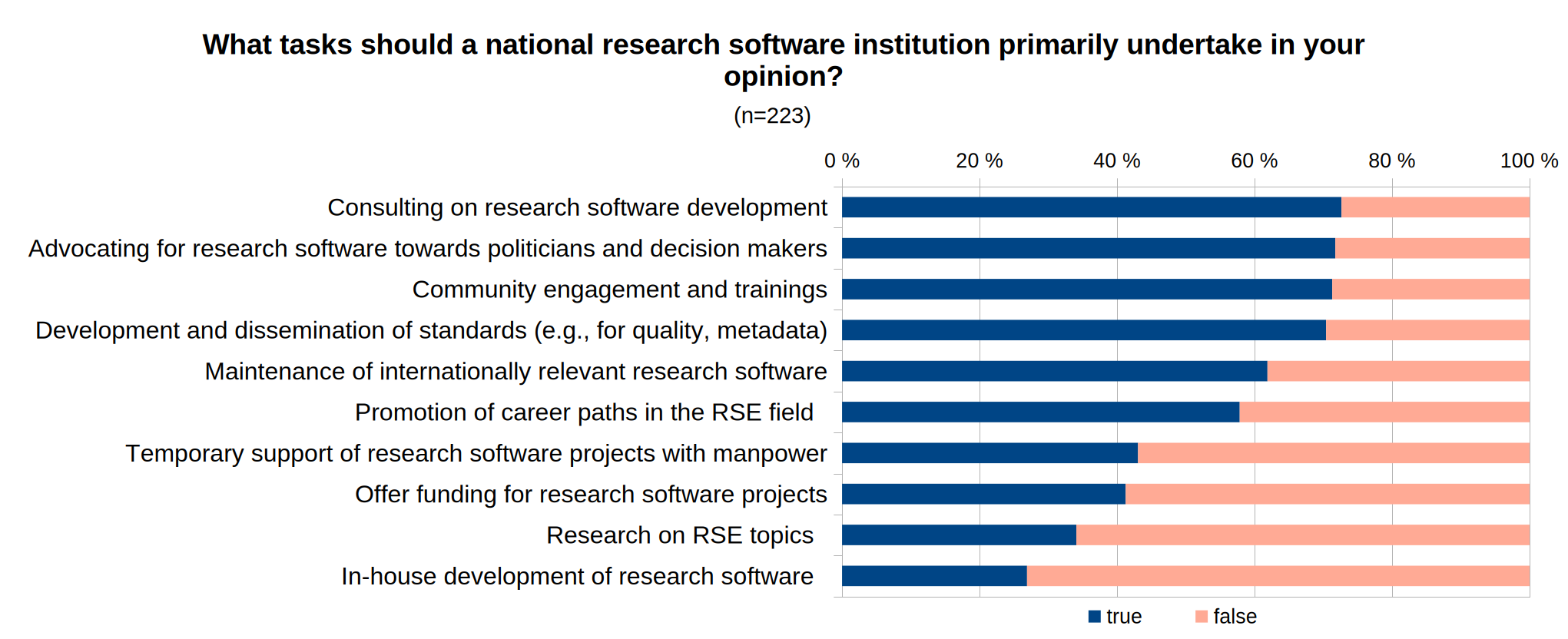
Figure 1: The responses shown were given in answer to the question ‘What tasks should a national research software institution primarily undertake in your opinion?’ Respondents were able to select multiple answers; the results show the percentage of respondents who selected each option.
By contrast, direct research software development was among the least popular options (Figure 1). The open-ended responses help explain why. Rather than acting as a research software development centre, respondents generally envisioned an enabling organisation that supports RSEs, strengthens existing efforts, and connects expertise already distributed across the ecosystem. Several themes emerged consistently in the open-ended responses. Sustainability was a major concern, with respondents highlighting the challenge of maintaining research software after project funding ends and emphasising the importance of supporting widely used open-source research software over the long term. Respondents also pointed to the need for stronger career pathways for RSEs, including greater recognition of research software contributions and more stable employment opportunities. Finally, many emphasised coordination, training, and knowledge exchange. Rather than creating new centralised structures, respondents saw value in an institution that connects existing initiatives, helps share expertise, supports professional development, and fosters collaboration across institutions and disciplines.
Taken together, the responses suggest a fairly consistent view of the role a national research software institution could play within Germany’s research software ecosystem. While respondents overwhelmingly support the idea of a national research software institution, the survey suggests that many do not see research software development or providing direct research software services as its primary role. Instead, respondents emphasised functions that support and strengthen the broader ecosystem, including community engagement, training, career development, coordination, advocacy, and the long-term sustainability of research software.
As discussions around a potential German research software institution continue, these results provide a valuable snapshot of what the community hopes such an institution might become. Stay tuned for future posts exploring what the 2026 International RSE Survey reveals about the experiences, challenges, and priorities of RSEs working in Germany today.