Advocacy is key – Insights and reflections from deRSE26
27.03.2026
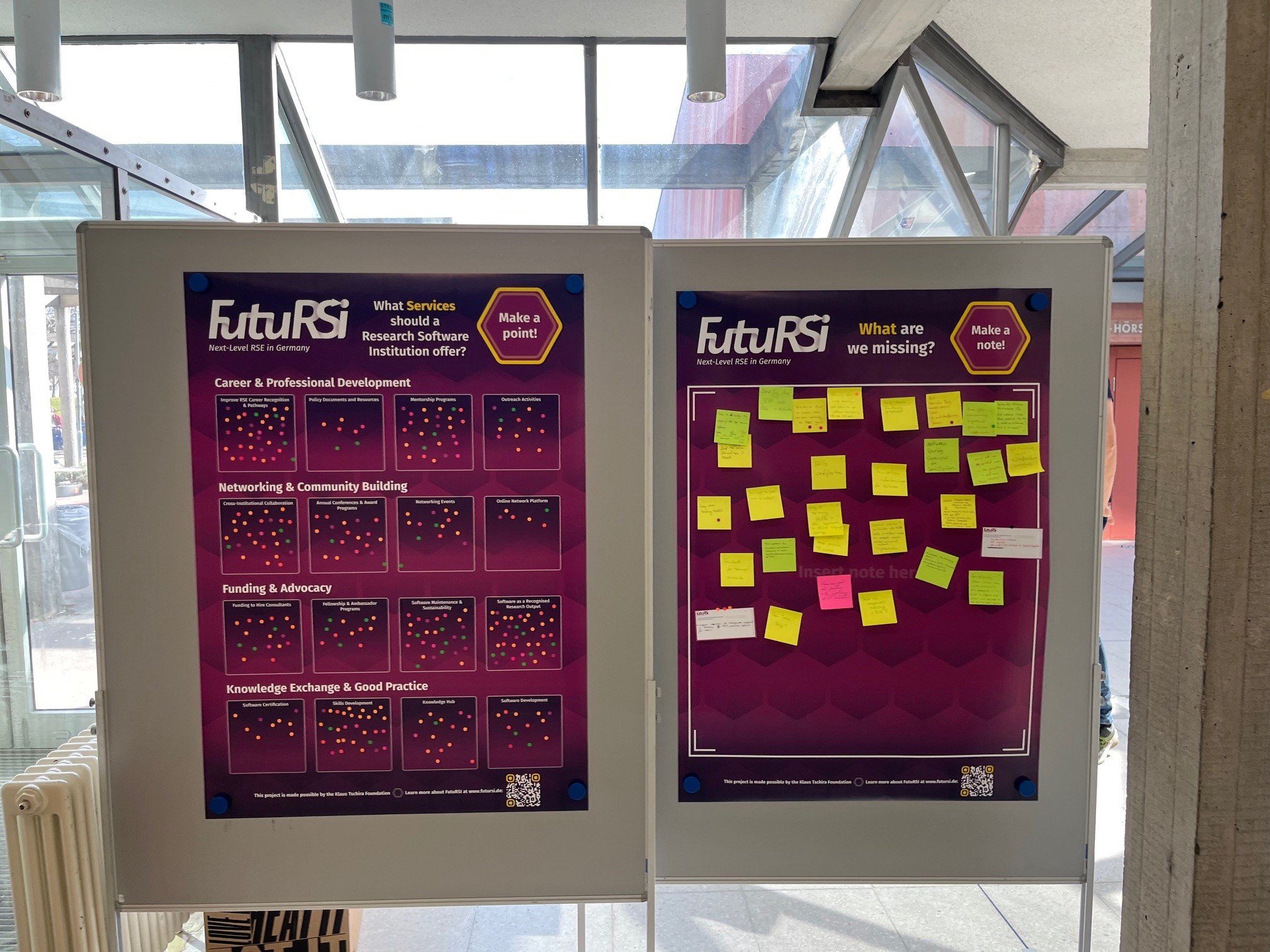
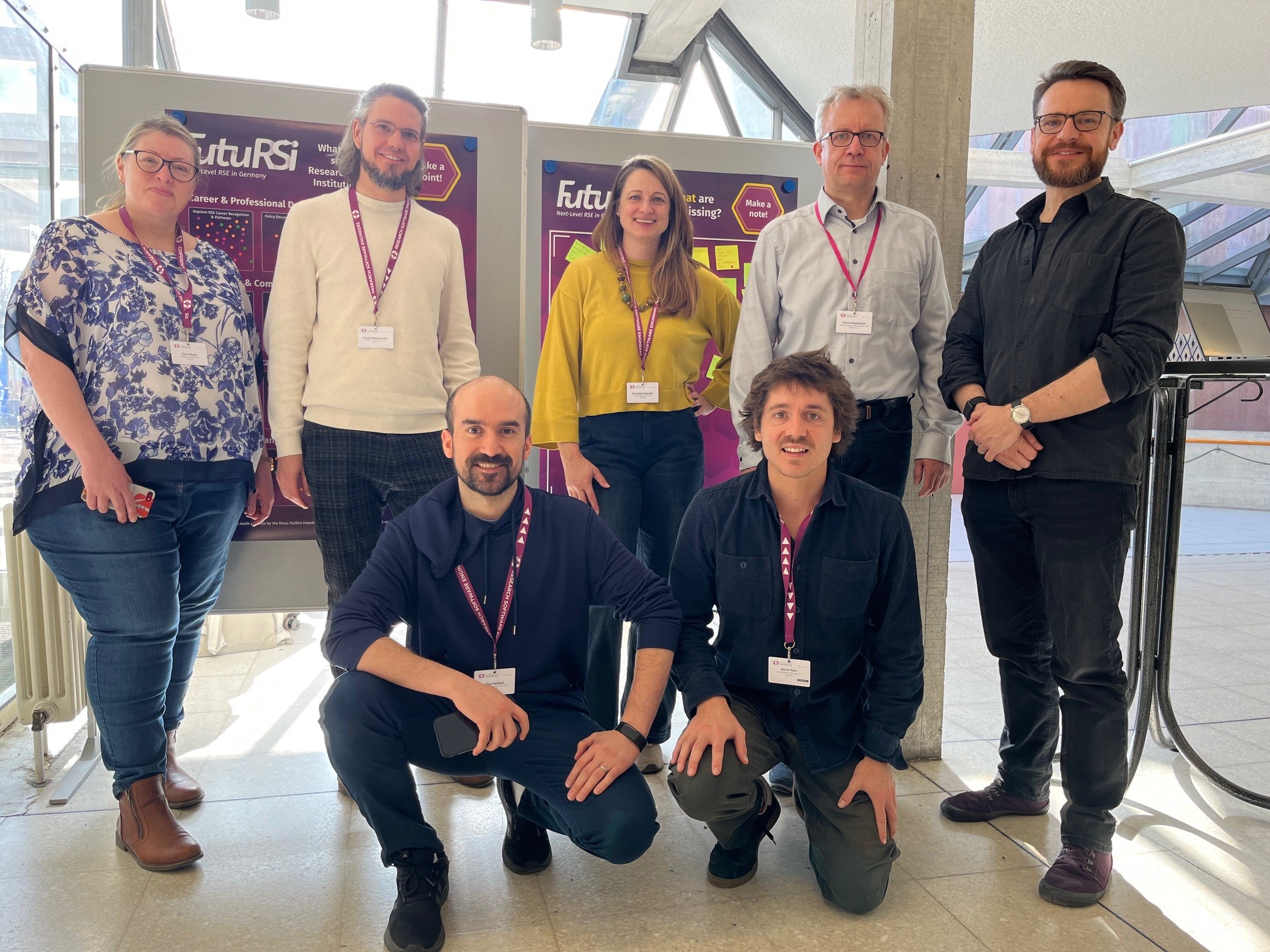
What direction should a national Research Software Institution in Germany take? This question accompanied us throughout deRSE26. In conversations with the community, it quickly became clear that there is not only a wide range of ideas, but also a fairly consistent sense of what is most urgently needed to sustainably strengthen research software in Germany.
Make a point! – Feedback from the community
To better understand expectations and needs, we set up an interactive feedback format at our booth. Visitors could use sticky dots on a poster to indicate their priorities across different topic areas and also add their own thoughts and ideas.
A fairly clear picture emerged:
A central theme is the recognition of research software as a scientific output. Many contributions focused on how software can become more visible and be established as a legitimate result of research — whether through new publication formats, adapted evaluation criteria, or by highlighting successful projects and best practices.
Closely connected to this is the question of career paths for RSEs. There is a strong desire for clearer roles, better career prospects, and more stable, long-term positions. The need to better define and formally establish the RSE profession was also emphasized repeatedly.
Another important topic is skills development. The community highlighted the need for accessible and structured training opportunities — from workshops and courses to certification programs. At the same time, it was noted that RSE competencies should be understood more broadly, going beyond programming alone.
Community building and networking also played a major role. There is clear interest in stronger collaboration between institutions and across national borders. At the same time, open questions remain — for example, regarding the role of industry and the private sector within the research software ecosystem.
Finally, the sustainability of research software was a recurring concern. Many see a need for long-term structures that support maintenance and further development beyond individual projects, even though there are also questions about how feasible such models are in practice.
Deep dive: World Café discussions
These topics were explored further in a World Café format, where participants discussed them from different perspectives. Several key points stood out:
Make support visible and accessible
There is a need for concrete support structures — from training and best practices to clear role definitions and guidance for RSEs.A central institution with a decentralized mindset
The preferred model is an organization that is clearly visible and structured, while remaining regionally grounded and close to the community.Advocacy as a core function
RSE interests need stronger representation — towards policymakers, funding bodies, and the broader research system. Visibility is crucial here.Strengthen existing structures instead of reinventing them
Rather than building parallel systems, a future institution should connect, support, and expand existing networks and initiatives.Community as the foundation
Exchange, networking, and shared spaces were highlighted as essential — across the entire lifecycle of research software.
Conclusion
The discussions at deRSE26 demonstrate one thing above all: the need is there — and while expectations are diverse, they are, in many respects, quite consistent.
At its core, the conversation is about visibility, recognition, and sustainable structures. Or put differently: without strong advocacy, it will be difficult to advance any of the other priorities in the long term.